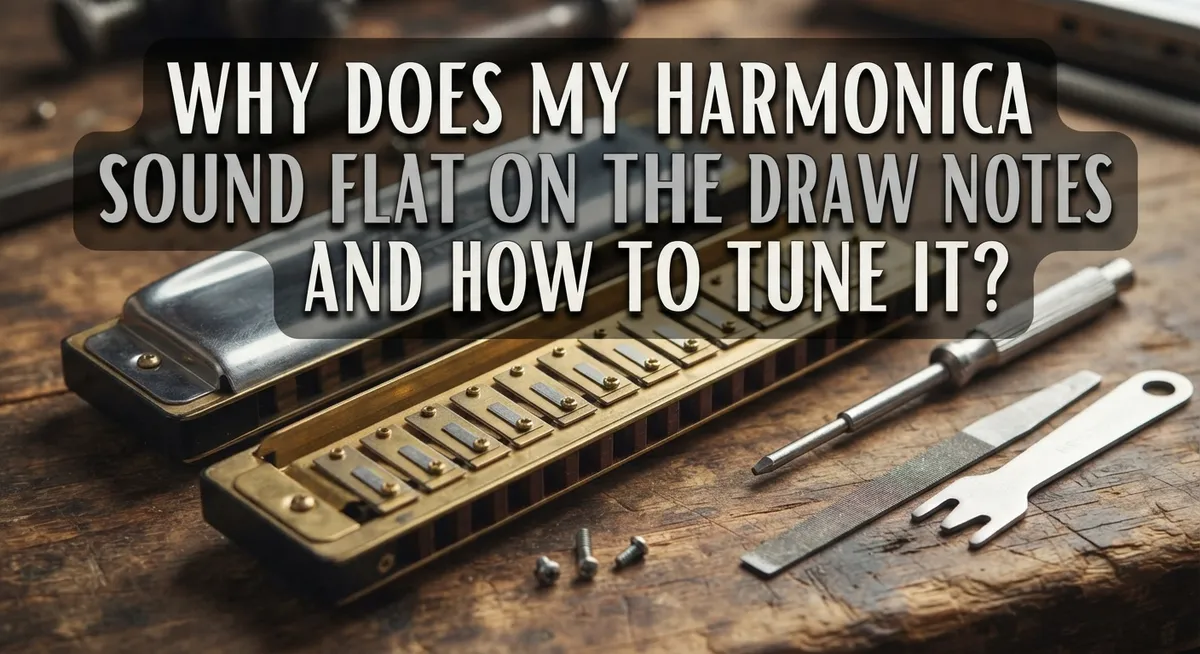
Why Does My Harmonica Sound Flat on the Draw Notes and How to Tune It?
You play a favorite tune, and suddenly the draw notes sound dull. They feel flat, weak, and out of place.
This problem frustrates many harmonica players. You might think your instrument is broken or badly made.
But the truth is often simpler. Metal fatigue in the reeds can cause this flat sound over time. Reed damage or wear also plays a big role.
Sometimes, the harmonica is not the real problem at all. Your embouchure, or mouth position, might be affecting the pitch. This is especially true on higher holes where control gets tricky.
In this article, we will explore why draw notes go flat. We will look at reed fatigue, damage, and common tuning mistakes.
By the end, you will know if it’s your harmonica or your technique causing that flat sound. You will also learn how to get your draw notes sounding bright and clear again.
In a Nutshell
- Reed fatigue is often the main reason your draw notes sound flat. Metal reeds lose their frequency over time.
- Check for reed damage before you blame the tuning. A cracked or bent reed will not play true, no matter what you do.
- Your embouchure matters a lot, especially on higher holes. Small changes in mouth position can shift the pitch you hear.
- Sometimes, the harmonica is not out of tune at all. Your technique might be the actual cause.
- If notes go flat again after tuning, this is a common sign of ongoing metal fatigue. It can happen more than once.
- Practice your draw notes on the high end of the harmonica. This helps train your mouth to find the right pitch.
- Do not assume every flat note means a broken harmonica. Many players fix this simply by adjusting how they play.
Understanding How Harmonica Reeds Produce Pitch
A harmonica reed is a thin strip of metal that vibrates to create sound. When you draw air through a hole, the reed moves back and forth very fast. This movement produces the pitch you hear.
The reed’s thickness and length determine its pitch. A longer or thicker reed vibrates slower and produces a lower note. A shorter or thinner reed vibrates faster and creates a higher note. The speed of vibration is called frequency.
Draw notes work differently than blow notes. When you draw, air pulls the reed inward. This motion requires the reed to overcome air resistance. The reed must have enough strength to vibrate freely. If the reed loses strength, it vibrates slower. A slower vibration means a lower pitch. This is why draw notes often sound flat.
Metal reeds experience fatigue over time. Each time you play, the reed flexes. This constant bending weakens the metal gradually. Metal fatigue is the main reason draw notes go flat. The reed does not break immediately. Instead, it loses its ability to vibrate at full speed.
Your embouchure also affects pitch perception. Embouchure is how you position your mouth and lips. On higher holes, mouth position changes the effective reed length. A slightly different mouth angle can make a note sound flat or sharp. This is why two players can play the same harmonica and hear different pitches.
Understanding these basics helps you identify the real problem. Is it metal fatigue? Is it reed damage? Or is it your mouth position? Knowing the answer guides your next step. You can then decide whether to adjust your technique or inspect the harmonica itself.
Metal Fatigue: The Hidden Cause of Flat Draw Notes
Metal fatigue is a real physical process that happens inside your harmonica. When you play draw notes repeatedly, the metal reed flexes back and forth thousands of times. Each bend creates tiny stress points in the material.
Over time, these stress points weaken the reed. The metal loses its ability to vibrate at the correct frequency. This is why your draw notes start sounding flat even though you just played them yesterday.
The key difference between a broken reed and a fatigued one matters here. A broken reed snaps or cracks visibly. A fatigued reed still works, but it vibrates more slowly than it should. This slower vibration produces a lower pitch.
Inspect your reeds carefully under good light. Look for any visible cracks or bends at the reed tip. If the reed looks fine but sounds flat, metal fatigue is likely happening inside the material itself.
Reeds go flat repeatedly after tuning because the fatigue continues. Each time you play, the metal weakens more. This is completely normal and does not mean you have a defective harmonica.
The draw notes on higher holes are especially prone to this issue. These reeds are thinner and experience more stress during play. They fatigue faster than lower hole reeds.
You cannot reverse metal fatigue once it starts. The reed will keep losing pitch gradually. This is why many players accept that retuning becomes necessary periodically. Some harmonica players retune their instruments every few months as routine maintenance.
Understanding metal fatigue helps you stop blaming yourself. Your technique might be fine. The harmonica simply needs attention after heavy use.
Is It the Harmonica or Your Embouchure? How to Tell
Your embouchure (mouth position and technique) often gets blamed for flat draw notes when the harmonica itself might be the culprit. However, the reverse is also true. Many players assume their harmonica is broken when their technique needs adjustment.
Here’s how to tell the difference. First, test your embouchure on a harmonica you know works well. Play the same draw notes on a different harmonica. If those notes sound normal and in tune, your technique is likely the issue. If they sound flat on multiple harmonicas, the problem is probably your mouth position.
Next, focus on your mouth shape. Draw notes require a different embouchure than blow notes. Your lips should form a small opening, and your tongue position matters. Higher holes especially demand precise mouth positioning. A slightly looser embouchure can make notes sound flat even though they are actually in tune.
Listen carefully to the pitch. Flat notes from embouchure problems sound slightly lower but still clear. Flat notes from reed damage often sound weak or breathy alongside being low.
Practice drawing on the high end of the harmonica first. These holes teach you proper embouchure faster because mistakes become obvious. Once your high hole technique feels solid, move to lower holes.
Record yourself playing. Listen back to identify whether the flatness comes from pitch issues or technique problems. This audio feedback reveals patterns you might miss while playing.
Test your reeds by inspecting them under bright light. Look for bending, cracks, or gaps. A damaged reed causes flatness no matter how perfect your embouchure is. A fatigued but intact reed often responds to embouchure adjustments.
Step-by-Step: Inspecting Your Reeds for Damage
Checking your reeds for damage is the first step to solving flat draw notes. You need good light and a calm environment to do this properly.
Start by removing your harmonica from its case. Hold it up to a bright light source, like a lamp or window. Look directly at the reed plates, which are the metal parts that hold the reeds. You’re searching for visible cracks, bends, or breaks in the thin metal strips.
Pay close attention to the reed tips. These are the most likely spots to show damage. A bent or lifted reed tip will produce a flat note because the metal cannot vibrate at its correct frequency. If you see a tip that points upward or looks crooked, this is your culprit.
Check both the draw and blow reed plates. Draw notes come from reeds on the bottom plate, but inspecting both sides gives you complete information. Look for any discoloration or rust spots, which indicate corrosion that weakens the metal.
Gently tap the harmonica while holding it to the light. Sometimes small debris or buildup hides on the reeds. Watch for any particles that fall away. These can block reed movement and cause flat notes.
If you spot a crack or break, the reed is damaged beyond tuning. A bent tip might be carefully adjusted, but this requires experience. Document what you find by taking photos if possible. This helps you remember exactly which reeds show problems.
Write down which holes produce flat notes and match them to your visual inspection. This comparison reveals whether the flat sound comes from actual reed damage or something else entirely.
How to Tune a Flat Draw Reed at Home
Tuning a flat draw reed at home requires basic tools and patience. You’ll need a small flathead screwdriver, a tuner (digital or acoustic), and steady hands to adjust the reed properly.
Start by identifying which specific hole produces the flat note. Play each draw note carefully and listen for the ones that sound lower than they should. Write down the hole numbers so you don’t forget them during the tuning process.
Remove your harmonica from its casing and locate the reed plate. The draw reeds sit on one side of the reed plate. Inspect the reed tip closely under bright light before making any adjustments. If you see cracks or bends, the reed may be too damaged to tune safely.
To raise the pitch of a flat draw reed, you need to make it shorter or stiffer. Use your screwdriver to gently lift the reed tip upward. Make very small adjustments, then test the note immediately. Even tiny movements change the pitch significantly.
Work slowly and test frequently. Raising the pitch too much creates a sharp note, which is harder to fix than starting over. If this happens, you can carefully lower the reed tip again.
Place your harmonica near a tuner while you adjust. This lets you see the exact pitch in real time. Stop adjusting once the note matches the correct frequency.
Metal fatigue means reeds often go flat again after tuning. This is normal and doesn’t mean you tuned incorrectly. Your embouchure also affects pitch perception on higher holes, so practice your mouth position while testing the results.
Refining Embouchure for Better Pitch on High Holes
Your mouth position plays a bigger role than you might think when draw notes sound flat on higher holes. The pitch you hear depends on how you shape your mouth, where you place your tongue, and how much air pressure you apply. Small adjustments here can make a real difference.
Start by focusing on your mouth shape. On higher holes, try narrowing your mouth opening slightly. This concentrates your air stream and helps produce a clearer, sharper pitch. Many players unconsciously open their mouth too wide on high notes, which causes the pitch to drop and sound flat.
Next, pay attention to your tongue position. Your tongue should sit flat and relaxed in your mouth when playing draw notes. If your tongue pulls back or rises up, it changes the air chamber inside your mouth and affects pitch. This is especially true for holes 7, 8, 9, and 10.
Practice drawing on the high end of the harmonica first. Spend time playing just the upper holes to build muscle memory for the correct embouchure. Your mouth needs to learn the exact positioning that produces proper pitch on those higher frequencies.
Record yourself playing these high draw notes. Listen back and compare your sound to a reference recording or tuner. You’ll notice patterns in when your pitch drops or stays true.
Work slowly and deliberately. Don’t rush your practice sessions. Your embouchure muscles need time to develop the control required for consistent pitch on high holes. Consistent practice builds the awareness and strength needed to maintain proper pitch without overthinking it.
Common Mistakes When Diagnosing Flat Notes
Many players make quick assumptions when draw notes sound flat. The biggest mistake is blaming the harmonica immediately without checking your own technique first. Your mouth position changes how air vibrates through the reeds, which directly affects pitch perception.
Another common error is confusing embouchure problems with tuning issues. You might adjust a reed that actually works fine. This wastes time and risks damaging a perfectly good harmonica. Test your embouchure by playing the same note on different harmonicas. If it sounds flat on all of them, the problem is likely your technique, not the instrument.
Players often ignore metal fatigue as a root cause. Reeds go flat repeatedly after tuning because the metal loses its original stiffness over time. This is normal wear, not a sign of poor tuning work. Assuming you tuned incorrectly leads to unnecessary re tuning attempts.
Not inspecting reeds carefully is another frequent mistake. You might assume a reed needs tuning when it actually has a crack or bend. Damage and tuning problems look different under bright light. A cracked reed won’t respond to pitch adjustment the same way a fatigued reed does.
Higher holes present special challenges. Players assume these notes are flat due to tuning, but embouchure matters more up there. Your mouth shape affects high frequency notes significantly more than low ones.
Finally, many musicians skip the listening step. You need to compare your draw notes against a reference pitch using a tuner. Ears alone can deceive you, especially on higher holes where pitch perception becomes tricky. Take time to verify what you’re actually hearing before making any adjustments.
Troubleshooting Recurring Tuning Problems
Recurring tuning problems with flat draw notes happen more often than you might think. The key issue is that metal fatigue causes reeds to lose frequency over time. Once you tune a reed, it may go flat again within days or weeks because the metal gradually weakens.
Understanding why this happens helps you manage expectations. When you adjust a reed to raise its pitch, you’re physically changing its tension and length. This stress on the metal creates microscopic changes. Over time, the reed naturally wants to return to its original shape, which means the pitch drops again.
Here’s what you need to know about recurring problems. First, reeds that go flat repeatedly may need professional restoration rather than repeated home tuning. Second, some harmonica models have reeds that are more prone to fatigue than others. Third, how often you play directly affects how quickly reeds deteriorate.
To minimize recurring issues, play gently and avoid aggressive bending on draw notes. Harsh playing accelerates metal fatigue significantly. Store your harmonica in a dry case when not in use, since moisture can speed up deterioration.
If a specific hole keeps going flat after tuning, document this pattern. This information helps you decide whether to continue tuning or replace the reed plate. Some players find that tuning the same reed two or three times actually helps stabilize it, though this isn’t guaranteed.
The reality is that some tuning drift is normal and expected. Professional musicians often retune their instruments regularly. If flat notes recur constantly on the same holes, you may be dealing with deeper reed damage rather than simple fatigue.
Final Thoughts
Flat draw notes usually come from two things. Reed fatigue is one cause. Embouchure issues are the other.
Knowing the difference matters. A tuning fix will not help an embouchure problem. Practice will not fix a damaged reed either.
Start with the simple checks first. Look at your mouth position on higher holes. Test if adjusting your embouchure changes the pitch.
If the note stays flat, then check the reed itself. Look for physical damage or wear. Metal fatigue happens over time and cannot be avoided completely.
Tuning a reed at home is possible with patience. You need basic tools and a steady hand. Small adjustments matter more than big ones.
Remember that reeds may go flat again after tuning. This is normal for metal parts that vibrate constantly. Professional players deal with this too.
Document any patterns you notice. If one hole keeps causing trouble, write down when it happens. This helps you spot trends over time.
Gentle playing extends reed life. Aggressive bending speeds up wear on draw notes. Simple technique changes can prevent future problems.
Your harmonica is a mechanical instrument with moving parts. Both maintenance and skill play a role in how it sounds. Neither factor works alone.
Take time to listen closely to your playing. Many flat note issues get missed because players do not stop to check. Slow down and pay attention.
With practice and basic care, most flat draw note problems become manageable. You will learn to spot the difference between technique and mechanical issues quickly. This skill improves with every practice session.
Frequently Asked Questions
Why do my draw notes sound flat when my harmonica is new?
New harmonicas sometimes have metal reeds that haven’t settled yet. The reeds need time to stabilize. Play your harmonica gently for the first few hours. This helps the metal adjust naturally.
Your embouchure also matters here. New players often position their mouth incorrectly on draw notes. This makes the pitch sound lower than it actually is. Try adjusting your mouth shape slightly and listen for changes.
If flatness continues after a few days of playing, inspect the reeds for damage. A bent or dented reed will produce a flat note consistently.
Can embouchure really cause flat sounding draw notes?
Yes, absolutely. Your mouth position directly affects the pitch you produce. When you draw air through a harmonica hole, the way your lips shape the airflow changes the frequency.
Higher holes are especially sensitive to embouchure changes. A slightly different mouth position on hole 7, 8, or 9 can make the note sound noticeably flat. This happens even when the harmonica is perfectly tuned.
Try this: play the same draw note while changing your mouth shape. You’ll hear the pitch shift. This proves that embouchure, not tuning, causes many “flat” problems.
What does metal fatigue in harmonica reeds mean?
Metal fatigue happens when reeds vibrate thousands of times. The metal slowly loses its elasticity. When reeds become fatigued, they vibrate more slowly and produce lower frequencies.
This is why draw notes go flat after tuning. The reed was tuned to the correct pitch, but metal fatigue gradually lowered it again. This is normal and expected with regular playing.
Gentle playing extends the life of your reeds. Aggressive bending and hard draws speed up fatigue.
Should I retune my harmonica if draw notes keep going flat?
Yes, you can retune if the flatness bothers you. However, understand that retuning may be needed again later due to metal fatigue.
Document which holes go flat most often. This helps you spot patterns. If hole 4 draw consistently goes flat, you know to expect this.
Professional musicians retune regularly. This is part of harmonica maintenance. Some players accept minor flatness as part of the instrument’s character.

Hi, I’m Tessa! As a lifelong music lover and gear enthusiast, I started this blog to help fellow musicians navigate the overwhelming world of instruments and equipment. I spend my time researching, comparing, and reviewing musical gear so you can spend yours doing what matters most — making music.