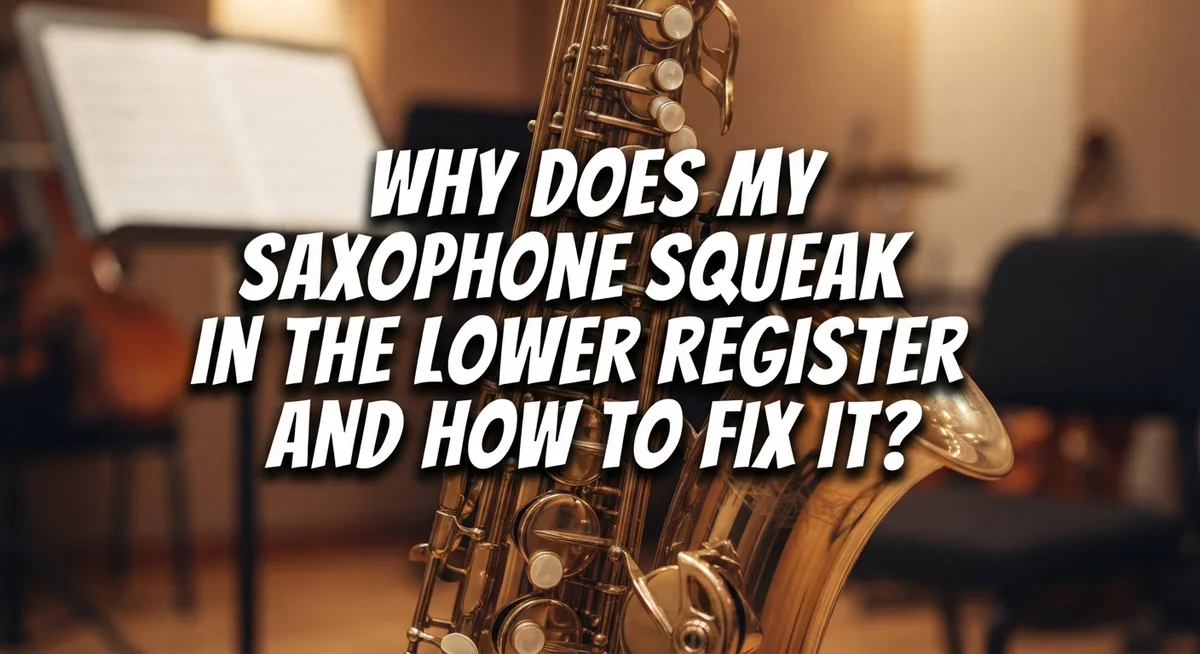
Why Does My Saxophone Squeak in the Lower Register and How to Fix It?
Does your saxophone squeak every time you play a low note? You are not alone. This is one of the most common problems that saxophone players face.
A squeaky low register can feel frustrating. It happens right when you want your sound to feel warm and steady.
The good news is that this issue almost always comes from a few fixable habits. Your embouchure, finger placement, and air pressure all play a role.
In this guide, we will break down why your saxophone squeaks in the lower register. We will look at common causes like mouthpiece pressure, finger technique, and reed placement.
By the end, you will know exactly how to stop those annoying squeaks. Let’s get your low notes sounding smooth again.
In a Nutshell
- Check your embouchure first. Your bottom teeth position matters a lot. Too much pressure on the mouthpiece often causes squeaks in the lower register.
- Look at your reed. A dry or poorly placed reed is a common squeak culprit. Make sure it sits straight and gets wet before you play.
- Watch your finger placement. Loose or incorrect fingers on the keys can create gaps. This lets air escape and causes a squeak.
- Ease up on air pressure. Blowing too hard forces the reed to vibrate wrong. Gentle, steady air works better for low notes.
- Give your horn time to warm up. Low D and notes below it often squeak until the saxophone settles. Play some warm up notes first.
- Build your tone slowly. Don’t force the sound out right away. Gradual airflow helps the lower register speak clearly without squeaking.
Understanding Why Low Notes Squeak on Saxophone
Your saxophone squeaks in the lower register because several things work together to disrupt the reed’s vibration. Understanding each cause helps you fix the problem faster.
Embouchure position is your first suspect. Your bottom teeth need to sit in a specific spot under the reed. If your bottom jaw pushes too far forward or sits too high, the reed vibrates incorrectly. This creates that annoying squeak sound. Your bottom lip should cushion your teeth, not let them press directly on the reed.
Mouthpiece pressure also matters greatly. Many players press the mouthpiece too hard into their mouth. This restricts the reed’s movement. The reed cannot vibrate freely when squeezed. You need firm contact, but not a crushing grip.
Air pressure is another key factor. Blowing too hard through the saxophone forces the reed to vibrate at the wrong speed. Low notes need steady, controlled air, not aggressive force. Think of it like speaking softly rather than shouting.
Finger technique affects low note stability too. Loose fingers or incomplete key coverage creates air leaks. These leaks break the airflow pattern. The reed loses its stable vibration pattern and squeaks as a result.
Reed condition plays a major role as well. A dry reed produces squeaks more easily. A reed placed incorrectly on the mouthpiece causes instability. The reed sits at a specific angle for proper vibration.
Warm up time matters for low notes specifically. Your saxophone needs several minutes before the lower register stabilizes. Low D and notes below it are particularly sensitive to temperature changes.
All these causes work together. Fix one or two, and squeaks often disappear completely.
Checking Your Embouchure and Bottom Teeth Position
Your bottom teeth position directly affects how your reed vibrates. When your teeth sit too far back or too far forward inside your mouth, the reed cannot vibrate freely. This blocked vibration creates squeaks, especially on low notes.
Start by checking where your bottom teeth contact the reed. Your bottom lip should cover your teeth completely. The reed should rest on your lip, not directly on your teeth. If bare teeth touch the reed, you will get squeaks almost every time.
Push your bottom jaw forward slightly. Many players naturally pull their jaw back when playing low notes. This backward position tightens your embouchure and stops the reed from moving properly. A forward jaw position lets the reed vibrate more openly.
Look in a mirror while you play a low D. Watch your bottom lip position. It should feel relaxed and cushioned, not tight or pulled. Your lip acts as a shock absorber between your teeth and the reed.
Excessive mouthpiece pressure is another embouchure mistake. Some players clamp down hard on the mouthpiece when playing low. This pressure squeezes the reed and prevents smooth vibration. Instead, use light, steady contact with your mouthpiece.
Test this fix by playing low notes with minimal mouthpiece pressure. You should feel the difference immediately. The squeaks may disappear or become much quieter.
Your embouchure changes throughout your range. Low notes need more space and less pressure than high notes. Practice switching between high and low passages. Notice how your embouchure must adjust each time. This awareness helps you fix squeaks faster and build better control overall.
Evaluating Reed Condition and Placement
Your reed’s condition and placement are the first things to check when your saxophone squeaks in the lower register. A dry reed simply will not vibrate properly. Before playing, soak your reed in water for 30 to 60 seconds. This moisture allows the reed to flex and respond to your air stream correctly.
Once your reed is wet, check its placement on the mouthpiece. The reed should sit perfectly centered. An off center reed creates uneven vibration and causes squeaks. Look at the reed from the side. It should align straight with the mouthpiece tip.
Press the reed gently onto the mouthpiece. Make sure it sits flush against the entire surface. Any gaps between the reed and mouthpiece will leak air and trigger squeaks. Run your finger along the reed’s back to feel for any separation.
Inspect the reed’s surface for cracks or damage. A cracked reed cannot seal properly. Replace it if you see any splits or warping.
Check that your reed’s tip is not too soft or too hard for your playing style. A reed that is too soft may vibrate excessively in the lower register. A reed that is too hard requires extra pressure, which also causes squeaks.
Store your reeds properly between sessions. Keep them flat in a reed case or holder. A bent or warped reed will never sit correctly on your mouthpiece again.
Test your reed placement by playing a low D. If the squeak disappears after you reposition the reed, you have found your problem. Many squeaks vanish simply by ensuring your reed sits wet and centered on the mouthpiece.
Correcting Mouthpiece Pressure and Positioning
Mouthpiece pressure and positioning directly affect how your reed vibrates. When you press too hard, your reed cannot move freely. This restriction causes the squeaking sound you hear in lower notes.
Start by reducing your mouthpiece contact. Many players push the mouthpiece too far into their mouth. Instead, place only the tip of the mouthpiece between your lips. Your bottom lip should cover your bottom teeth completely.
Test this adjustment by playing a low D. Notice if the squeak disappears or reduces. If it does, you found your problem. Gradually increase pressure only as much as you need for a clear tone.
Your bottom teeth position matters equally. Push your bottom jaw forward slightly. This changes the angle of your reed contact. Play the same low D again. You should hear a smoother sound without forcing air.
Position your mouthpiece so it sits evenly on your bottom lip. Tilting it up or down creates uneven pressure. An uneven surface stops your reed from vibrating correctly.
Check that your embouchure stays firm but relaxed. Tension in your face transfers to your mouthpiece pressure. Tight cheeks and jaw muscles force you to press harder. Loosen your facial muscles before playing low notes.
Practice playing low D with minimal pressure. Use just enough contact to keep the mouthpiece in place. Let your air support do the work instead. Your reed needs freedom to vibrate, not restriction.
Most squeaks disappear once you find the right pressure balance. This single fix solves the problem for many players. Spend time experimenting with different pressure levels. Your lower register will stabilize quickly once you discover your sweet spot.
Finger Technique and Key Coverage for Low Notes
Your finger placement directly controls how air moves through the saxophone’s lower register. When your fingers don’t seal the tone holes completely, air leaks out and causes squeaking.
Start by checking each finger’s position on its key. Your fingers should sit flat and centered on the tone holes. Press down firmly but without tension. Many players press too lightly on lower register keys, which creates small gaps that produce squeaks.
The side keys require special attention. These keys control the lower notes and need precise finger placement. Your pinky finger must sit squarely on the low B flat and low B keys. If your pinky sits at an angle, the keys won’t close properly.
Pay attention to your hand position overall. Your hands should stay relaxed and curved naturally. Tension in your hands travels to your fingers and causes them to lift slightly off the keys. This small lift is enough to create squeaking sounds.
Practice pressing each key slowly while listening for air leaks. You should hear a solid seal, not a hissing sound. If you hear hissing, adjust your finger until the sound stops.
Your thumb position matters too. The thumb rest should sit under your hand without forcing your fingers into awkward angles. This proper positioning helps your fingers stay flat on the keys.
Test your finger technique by playing a low D slowly. Press each key deliberately and hold it for a few seconds. Notice which keys feel secure and which ones feel loose. Once you identify loose keys, practice pressing them more firmly during your warm up sessions.
Consistent finger placement prevents most lower register squeaks. Spend time on this fundamental skill, and your squeaking will decrease noticeably.
Air Pressure and Breath Support Adjustments
Your breath support and air pressure directly control whether your lower register squeaks. Many players blow too hard when playing low notes, which actually causes the reed to vibrate incorrectly.
Start by reducing your blowing force. Instead of pushing air forcefully through the saxophone, use steady, controlled airflow. Think of your breath as smooth and even, not aggressive or sudden. Play a low note and notice if it squeaks. Now reduce your air pressure by about 20 percent and play the same note again.
Build your tone gradually rather than forcing air through the instrument. This means starting softly and increasing volume only as needed. Your lower register needs gentle support, not power.
Your diaphragm controls breath support better than your cheeks. Breathe from your belly, not your mouth. This creates stable, consistent airflow that helps the reed vibrate smoothly. Practice breathing deeply before each low note attempt.
Allow your saxophone time to warm up before playing lower notes intensely. Cold instruments respond differently than warm ones. Spend 5 to 10 minutes playing mid range notes first, then gradually move to lower notes.
Inconsistent squeaking often points to breath support issues. If your squeak appears sometimes but not always, your air pressure is probably fluctuating. Focus on maintaining steady airflow throughout each phrase.
Combine reduced air pressure with proper embouchure and correct finger technique. These three elements work together. When one element is wrong, squeaking returns quickly. Practice each component separately, then combine them during longer practice sessions.
Step-by-Step Troubleshooting Routine for Squeaky Low Notes
A step by step troubleshooting routine helps you find exactly which factor causes your squeaks. Start with the easiest checks first, then move to more complex adjustments.
Begin by examining your reed. Remove it from the mouthpiece and inspect it closely. Look for cracks, chips, or warping along the tip. A damaged reed causes frequent squeaking in the lower register. Wet your reed thoroughly before playing. A dry reed vibrates inconsistently and produces squeaks. Place the reed on your mouthpiece so it sits centered and straight. Misaligned reeds create air leaks that trigger squeaks immediately.
Next, warm up your saxophone for five minutes. Play middle register notes gently before attempting low notes. Your instrument needs time to reach proper temperature. Cold saxophones produce squeaks even when your technique is correct.
Now test your embouchure by playing a low D. Pay attention to how your bottom teeth feel. Are they positioned too far forward? Move them slightly back and try again. Notice any improvement in the squeak.
Reduce your mouthpiece pressure gradually. Play the same low D with lighter contact. Your reed should vibrate freely without excessive force crushing it. Find the sweet spot where pressure feels firm yet relaxed.
Check your finger placement next. Press each key slowly and listen for air leaks. Your side keys need special attention since they control lower note venting.
Finally, adjust your air pressure. Blow more gently and build your tone gradually. Forcing air through the instrument almost always creates squeaks in the lower register.
Work through these steps methodically. Most squeaking problems disappear once you identify which factor needs adjustment.
Common Mistakes That Cause Persistent Squeaking
Many saxophone players make the same mistakes repeatedly, and these errors cause persistent squeaking in the lower register. Understanding what you’re doing wrong helps you fix the problem quickly.
Pushing too much mouthpiece into your mouth is the first major mistake. Your lower teeth need room to vibrate freely. When you insert the mouthpiece too deeply, your embouchure becomes too tight. This tension stops the reed from vibrating properly. Your lower register sounds like a squeak instead of a clear note.
Blowing with excessive force is another common error. New players think more air means better tone. The opposite is true. Hard blowing creates squeaks in the lower register. Your saxophone needs controlled, steady air. Think of building your tone gradually instead of forcing it.
Incorrect reed placement causes squeaking that seems random. Your reed must sit perfectly on the mouthpiece. If it shifts even slightly, low notes squeak. Check that your reed sits straight and centered every time you play.
Poor finger technique contributes to persistent squeaking too. Fingers that don’t press keys fully allow air to escape. This escape creates squeaks on low D and below. Your fingers must cover tone holes completely and press keys down firmly.
Neglecting the warm up period leads to squeaking that disappears after playing. Your saxophone needs five minutes of gentle warm up. Start with middle register notes. Your instrument needs time to reach proper temperature before you attempt lower notes.
These four mistakes work together to cause squeaking. Fix each one systematically, and your lower register improves dramatically.
Final Thoughts
Squeaking in your lower register feels frustrating, but it rarely means something is broken. Most squeaks come from small technical habits you can fix quickly.
Your embouchure, reed, breath support, and finger placement all work together. When one element slips, your saxophone tells you through a squeak.
Think of squeaking as helpful feedback, not a failure. Your instrument shows you exactly where to adjust your technique.
Start with the basics every time. Check your reed first. Make sure it sits wet and properly placed on the mouthpiece.
Next, look at your embouchure. Your bottom teeth position matters more than you might think for low notes.
Reduce how much mouthpiece you place in your mouth. Less contact often creates better control over low D and notes below it.
Slow down your air pressure too. Blowing softly and building volume gradually works better than forcing air immediately.
Finger placement deserves attention as well. Sloppy key coverage on lower notes creates gaps that cause unwanted sounds.
Give your saxophone time to warm up before pushing into demanding low passages. Cold instruments squeak more often than warmed up ones.
Remember that inconsistent squeaking usually points to breath support problems rather than equipment issues. If your squeak comes and goes, focus on your air pressure first.
Practice patience with this process. Most players fix their lower register squeaks within a few weeks of consistent attention.
Test one adjustment at a time. This helps you identify which factor caused your specific squeak.
Your saxophone wants to sound smooth in every register. With steady practice on embouchure, breath support, and finger technique, those squeaks will disappear for good.
Frequently Asked Questions
Why does my saxophone only squeak on low D and below?
Low D and notes below it require different embouchure control than your middle register. Your bottom teeth position becomes critical in this range. When teeth angle incorrectly, air escapes and causes squeaks. The lower notes also need less mouthpiece pressure than beginners typically use. You might be clamping down too hard without realizing it.
Allow your saxophone to warm up for five minutes first. Cold instruments resist lower notes and squeak more easily. Start with middle register notes to prepare your embouchure before attempting low D.
What’s the fastest way to stop squeaking right now?
Check your reed placement immediately. An improperly positioned or dry reed causes most sudden squeaking. Remove your reed and inspect it for cracks or damage.
Next, reduce your mouthpiece pressure by 20 percent. Play a low D with lighter contact against your lips. You should feel immediate improvement if pressure was the problem.
Finally, slow down your air flow. Many players blow too hard when frustrated by squeaks. Gentle, steady air pressure works better than forcing it.
Should I use a different reed to fix squeaking?
Reed quality matters, but a new reed won’t fix technique problems. A dry reed squeaks more than a wet one, so moisture comes first. Soak your reed before playing.
Test your current reed in different positions on the mouthpiece. Sometimes moving it slightly stops squeaking. If your reed has visible cracks or splits, replacement makes sense. Otherwise, focus on your embouchure and air pressure first.
Why does squeaking happen sometimes but not always?
Inconsistent squeaking usually points to breath support problems. Your air pressure varies when you’re tired or distracted. Warm instruments squeak less than cold ones. Your embouchure also changes slightly throughout practice sessions.
Play a low D repeatedly and notice when squeaks appear. Squeaking that comes and goes shows your technique is close to correct. Small adjustments to pressure or teeth position eliminate it.

Hi, I’m Tessa! As a lifelong music lover and gear enthusiast, I started this blog to help fellow musicians navigate the overwhelming world of instruments and equipment. I spend my time researching, comparing, and reviewing musical gear so you can spend yours doing what matters most — making music.