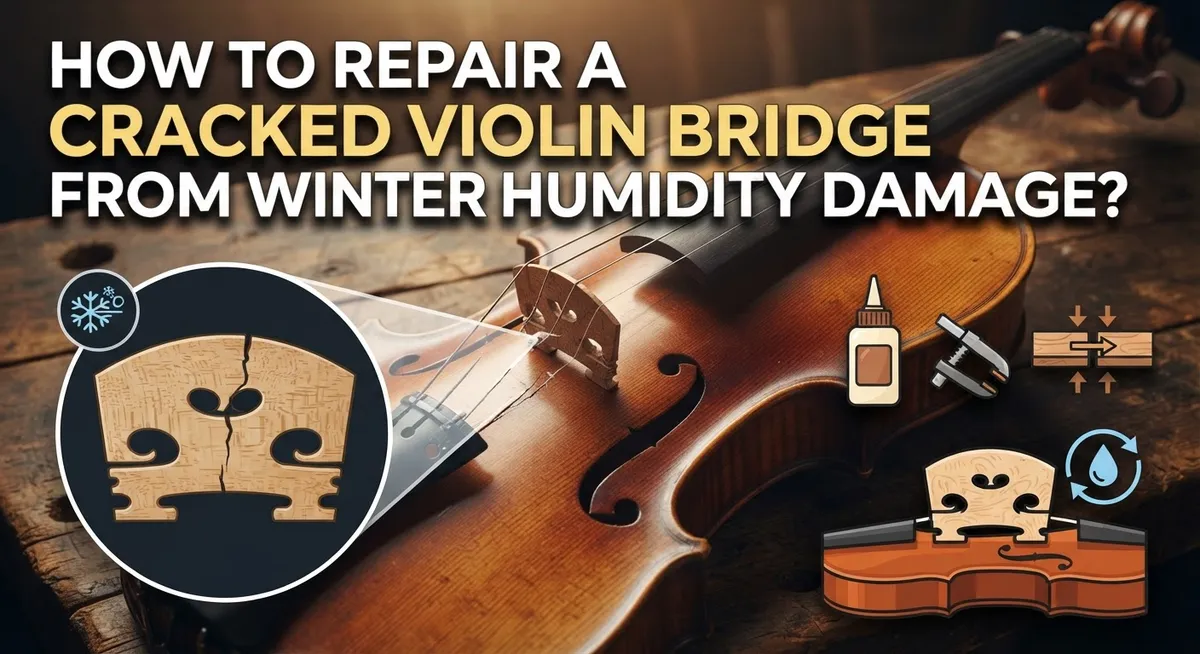
How to Repair a Cracked Violin Bridge From Winter Humidity Damage?
Winter cold can hurt your violin in ways you might not expect. Dry indoor air pulls moisture from the wood. This shift often leads to a cracked or collapsed bridge.
You open your case one morning. The bridge looks tilted or split. Panic sets in fast.
Take a breath. This problem is common during colder months. Many violin owners face the same issue every year.
This guide explains why humidity damages your bridge. We break down the science in simple terms. You will learn what happens inside the wood.
Our goal is simple. We want your violin to sound great again. We want it to stay safe from future damage too.
Keep reading to learn the full repair process. You will also find easy prevention steps that work all season.
In a Nutshell
- Winter humidity is the main culprit. Dry air pulls moisture from wood glue. This makes the bridge seams separate or crack.
- Skip the superglue fix. Cyanoacrylate glue seems handy, but it damages violin wood forever. Luthiers cannot reverse this type of repair later.
- A cracked bridge needs a real professional. Luthiers can reposition a leaning bridge or carve a brand new one. They match the fit to your specific violin.
- Repair costs depend on the damage. Simple repositioning costs less than a full replacement. Soundpost issues connected to bridge damage often cost more.
- Prevention beats repair every time. Keep your violin in a closed case when you are not playing. This buffers sudden temperature and humidity swings.
- Open your case less during winter months. Every time you open it, dry room air rushes in. This speeds up cracking in the bridge and body.
Why Winter Humidity Damages Violin Bridges
Winter humidity creates a perfect storm for violin bridges. Your bridge sits under constant pressure from the strings, and moisture changes make this worse. When indoor heating runs, the air becomes extremely dry. This pulls water from the wood glue that holds your bridge together.
Violin bridges are glued with water based adhesives. These glues work well in stable conditions. But dry winter air causes them to shrink and fail. The wood itself also loses moisture and warps. Your bridge may lean forward, backward, or crack down the middle.
The damage happens because wood moves when humidity changes. Winter air can drop to 20 percent humidity indoors. Your bridge wood responds by contracting. The glue joints cannot flex that much, so they separate or snap. This is why cracked bridges are so common in cold months.
Low humidity also affects other parts of your violin. The soundpost may crack. Body seams can open up. Your fingerboard might detach. The back and front panels sometimes develop splits. All of this happens because wood loses its moisture too fast.
Temperature swings make things worse. You bring your violin from a heated home into a cold car. Then you move it back inside. These rapid changes stress the wood and glue joints beyond their limits.
Understanding this process helps you see why prevention matters so much. You cannot stop winter from arriving. You can control the air around your instrument. Keeping your violin in a closed case buffers these humidity swings. A padded case cover adds extra protection. These simple steps prevent most bridge damage before it starts.
Signs Your Bridge Has Cracked or Shifted
Your bridge sends clear signals when winter humidity damage occurs. Knowing what to look for helps you catch problems early.
The most obvious sign is a visible crack running through the bridge wood. This crack may be thin or wide. You might see it split vertically down the middle or branch off at angles. Cracks often start small and grow larger as humidity continues to fluctuate.
A leaning bridge is another major warning sign. Your bridge should stand perfectly straight and perpendicular to the violin top. If it tilts forward, backward, or to either side, humidity has caused the glue to fail. The bridge loses its grip on the violin body and shifts position.
Listen for changes in sound quality. A damaged bridge often produces a dull, flat tone instead of your violin’s normal brightness. The sound may also become thin or scratchy. These acoustic changes happen because the bridge no longer transfers vibrations properly to the instrument body.
Check the bridge base where it contacts your violin. You might see gaps or separation between the wood and the violin surface. Seams that were once tight now have visible space. This separation means the water based glue has released due to humidity changes.
Pay attention to any wobbling or movement when you touch the bridge gently. A healthy bridge should feel completely stable. Movement indicates the glue joints have weakened significantly.
Some damage appears subtle at first. A slight lean or hairline crack might seem minor, but these problems worsen quickly in winter conditions. Early detection prevents further deterioration and makes repairs easier. Check your bridge regularly during cold months when humidity swings are most extreme.
Immediate Steps to Take After Discovering Damage
Stop playing immediately when you notice a cracked or shifted bridge. Continuing to play puts extra stress on damaged wood and makes the problem worse. Your violin’s sound quality depends on the bridge staying perfectly positioned.
First, place your violin in its case right away. Do not attempt to fix the bridge yourself with glue or other materials. The bridge is a precision component that requires professional handling.
Take a close look at the damage without touching the bridge excessively. Note whether you see a visible crack, a lean to one side, or separation from the violin body. This information helps your luthier understand what happened.
Check if the bridge is still standing upright or if it has shifted toward the fingerboard or tailpiece. A leaning bridge creates uneven pressure on your violin’s top plate. This imbalance can cause additional damage if left alone.
Listen for any buzzing sounds or rattling when you gently move the violin. These sounds often indicate that the bridge is no longer making proper contact with the top plate.
Do not open and close your case repeatedly while the bridge is damaged. Each time you open it, you expose the violin to temperature and humidity changes that can worsen the crack.
Keep your violin in a stable environment until you can see a professional. Avoid placing it near heating vents, windows, or doors where temperature fluctuates.
Contact a qualified luthier as soon as possible. Most professionals can examine your violin quickly and determine whether repositioning or full replacement is necessary. Acting fast prevents minor cracks from becoming serious structural problems that affect your instrument’s playability and sound quality.
Why Superglue and DIY Fixes Should Be Avoided
Superglue seems like a quick fix for a cracked violin bridge. It is not. This adhesive causes serious, permanent damage to your instrument.
Superglue (cyanoacrylate) works by bonding instantly to surfaces. It creates a rock hard seal that you cannot undo. Once applied to your bridge, removing it becomes nearly impossible without destroying the wood underneath.
Violin bridges need flexibility. The bridge must move slightly as the wood responds to humidity and temperature changes. Superglue locks everything in place rigidly. This prevents natural movement and creates stress points that lead to worse cracks later.
The adhesive also seeps into the wood grain. It hardens the fibers and makes the bridge brittle. A brittle bridge breaks more easily under string tension. Your bridge may snap completely during playing.
Superglue leaves residue that professional luthiers struggle to remove. They may need to sand away the damaged layer or replace the entire bridge. This costs more money and takes longer than treating the crack properly from the start.
DIY gluing without training is equally risky. You might apply too much glue, use the wrong adhesive, or clamp the bridge at an incorrect angle. Bridges must sit at a precise angle perpendicular to the violin body. Even slight misalignment changes your instrument’s sound and playability.
Water based violin glue (used by professionals) allows for reversibility. If something goes wrong, a luthier can carefully remove it and try again. Superglue offers no second chances.
The best approach is patience. Keep your violin in its case and contact a luthier immediately. Professional repair takes days, not hours. Rushing with superglue creates problems that take weeks to fix properly.
What to Expect From a Professional Luthier Repair
A professional luthier brings specialized knowledge that DIY attempts cannot match. These experts understand how your violin’s wood responds to humidity shifts and temperature changes over time.
When you bring your cracked bridge to a luthier, they start by examining the damage closely. They check the crack’s depth, location, and whether the bridge has shifted position. This inspection tells them if repair or replacement makes more sense for your instrument.
Luthiers use water based glues that professionals have relied on for centuries. These adhesives allow for reversibility if future adjustments become necessary. The glue penetrates wood fibers properly without creating permanent damage like superglue does.
The repair process itself varies based on your specific situation. A minor crack might require careful realignment and proper gluing. More severe damage often means the luthier will craft a new bridge fitted exactly to your violin’s top plate.
During repairs, professionals also check your soundpost. Winter humidity damage sometimes affects this internal component too. They ensure everything aligns correctly before returning your instrument.
Expect the luthier to discuss humidity prevention with you. They’ll explain how to store your violin properly and maintain stable conditions year round. This guidance helps prevent similar damage in the future.
The timeline for repairs typically ranges from a few days to two weeks. Complex work takes longer. Most luthiers keep you informed about progress.
Professional repair protects your violin’s value and sound quality. A properly repaired bridge restores your instrument’s tone and playability. The investment in professional work pays off through years of reliable performance and protection against recurring damage.
Preventing Future Humidity-Related Damage
Winter humidity fluctuations are the main culprit behind bridge cracks. The key to avoiding future damage is maintaining consistent humidity levels around your violin. This prevents the wood from expanding and contracting excessively.
Store your violin in its closed case whenever you’re not playing. The case acts as a buffer against sudden temperature and humidity shifts. This simple step protects your instrument far more than you might expect.
Monitor the humidity in your practice space. Aim for humidity levels between 45 and 55 percent. You can check this with an inexpensive humidity meter. Dry winter air dips well below this range, which stresses the wood.
Use a case humidifier during cold months. These devices release moisture slowly into the enclosed case environment. They work passively without electricity. Place one inside your case to create a protective microclimate around your violin.
Avoid opening your case repeatedly in dry conditions. Each time you open it, dry air enters and moisture escapes. Limit case openings to necessary practice sessions only.
Keep your violin away from heating vents, radiators, and direct sunlight. These heat sources create rapid humidity changes. Position your case in a cool, stable corner of your home instead.
Consider using a room humidifier in your practice area. This raises overall humidity levels throughout the space. It benefits your violin and your own comfort during winter months.
Never store your violin in basements or attics where humidity swings wildly. These spaces experience extreme fluctuations that damage wood instruments quickly.
Consistency matters more than perfection. Even small efforts to stabilize humidity protect your bridge from future cracking. These preventive steps cost nothing compared to professional repairs.
Common Mistakes When Handling a Cracked Bridge
Many violin owners make critical errors when their bridge cracks from winter humidity. These mistakes can turn a simple repair into an expensive disaster.
The most common mistake is rushing to apply superglue. People think fast bonding will solve the problem. Superglue actually damages the wood permanently. It seeps deep into the grain and hardens in ways that make professional repair nearly impossible. Luthiers spend extra time removing superglue residue, which costs more money and takes longer.
Another frequent error is clamping too tightly during DIY repairs. You might think pressure helps the glue work better. Excessive clamping actually crushes the delicate wood fibers of your bridge. This weakens the structure and creates new problems that didn’t exist before.
People also ignore the bridge’s need to move slightly. Violin bridges must flex as wood responds to humidity changes. Using rigid adhesives prevents this natural movement. Your bridge then cracks again quickly because it cannot adapt to seasonal shifts.
Many owners attempt repairs without understanding how violin glue works. Water based glue used by professionals allows reversibility if something goes wrong. Household glues do not offer this flexibility. You lock yourself into a permanent solution that might be incorrect.
Waiting too long before seeking help is equally damaging. Small cracks grow larger over time. Playing with a cracked bridge puts stress on the wood and soundpost. The damage spreads, making repairs more complex and expensive.
The safest approach is stopping immediately when you notice a crack. Store your violin safely and contact a luthier right away. Professional assessment prevents these costly mistakes and protects your instrument’s value and sound.
Troubleshooting Related Winter Damage Issues
Winter humidity creates specific problems that extend beyond your bridge. Understanding these related issues helps you protect your entire instrument from seasonal damage.
Low humidity in winter causes multiple seam separations. Your violin’s body consists of wooden pieces glued together with water based adhesives. When air becomes extremely dry, these seams open up gradually. You might notice gaps appearing between the top and sides, or along the back plate. These openings weaken your instrument’s structure and affect sound quality.
The fingerboard can detach from the neck during harsh winters. This happens because humidity changes cause wood to shrink unevenly. A detached fingerboard makes playing impossible and requires professional reattachment. Prevention is far simpler than repair.
Ply splitting represents another serious winter issue. The laminated wood layers in your violin can separate when humidity drops suddenly. This damage often starts invisibly inside the instrument and becomes obvious only when cracks appear on the surface. Once splitting begins, it spreads quickly.
Your soundpost may shift position as wood shrinks around it. This small wooden dowel inside your violin supports the top plate and transfers vibrations. When it moves, your instrument sounds dead and lifeless. A luthier can reposition it, but prevention saves money and stress.
The most important step is maintaining consistent humidity levels year round. Store your violin in its closed case with a humidifier during winter months. Avoid opening your case repeatedly in dry conditions. Keep the instrument away from heating vents and radiators.
These preventive measures protect not just your bridge, but every wooden component. Humidity control is your best defense against winter damage to your entire violin.
Final Thoughts
A cracked bridge feels scary, but it does not mean your violin is ruined. Winter humidity damage is common, and most repairs succeed when handled correctly.
The biggest lesson here is simple. Never rush a fix. A quick superglue patch might feel tempting, but it often causes more harm than good.
Your best move is always to visit a qualified luthier. They understand wood, grain direction, and how much pressure a bridge can safely take.
Trying to fix things yourself might save a little money now. But a poor repair often costs more later, especially if the bridge needs full replacement.
Think of your violin as a living instrument. Wood breathes, shifts, and reacts to its surroundings all year long.
That is why humidity control stays so important, even after your bridge gets repaired. One dry winter can undo months of careful playing and practice.
Small daily habits make a real difference. Closing your case properly and watching indoor humidity levels can prevent future cracks entirely.
If you already have a crack, do not panic. Stop playing, protect the bridge from further stress, and book a repair appointment soon.
Patience matters just as much as speed here. A calm, careful approach protects your violin far better than any fast fix.
In the end, your violin deserves steady care, not emergency reactions. Treat winter as a season that needs extra attention, not fear.
With the right habits and a trusted luthier, your violin can stay strong through every cold season. Consistent care today prevents costly repairs tomorrow.
Frequently Asked Questions
Can I use superglue to fix my cracked violin bridge?
No. Superglue is irreversible and damages the wood permanently. Once applied, you cannot remove it without destroying the bridge. Violin bridges need to be replaced or professionally repaired using water-based glue that can be undone if needed.
If your bridge is already cracked, stop and contact a luthier. Superglue traps moisture inside the wood and causes further damage over time.
What should I do immediately after I notice the crack?
Stop playing right away. Do not apply any glue yourself. Place your violin in its case and keep it closed to prevent temperature swings.
Call a luthier for an appointment. The crack will not get better on its own, and playing with a damaged bridge risks breaking it completely.
How does winter humidity actually crack bridges?
Winter air is very dry. Your violin’s wood shrinks as moisture leaves it. The bridge is glued to the top of your violin using water-based adhesive. When humidity drops, this glue weakens and the seams separate.
The bridge then shifts or collapses under string tension. A crack forms when the wood bends unevenly.
Can I prevent bridge cracks from happening?
Yes. Humidity control is your best defense. Keep your violin in a closed case when not playing. Use a humidifier in your room during winter months to maintain steady moisture levels.
Avoid opening your case in cold, dry environments. Temperature and humidity swings stress the wood and glue joints.
What happens if I ignore a cracked bridge?
The crack spreads. Your bridge may collapse completely during playing. This damages the top of your violin and can affect the soundpost position underneath.
A small crack is easier to fix than a shattered bridge. Contact a luthier as soon as you spot damage.

Hi, I’m Tessa! As a lifelong music lover and gear enthusiast, I started this blog to help fellow musicians navigate the overwhelming world of instruments and equipment. I spend my time researching, comparing, and reviewing musical gear so you can spend yours doing what matters most — making music.